

Scenting the dead
Olfactory art, a Playboy murder, Proust and his valet

The epigraph to Cristine Brache’s 2024 collection of poetry, Goodnight Sweet Thing, is a poem by Dorothy Stratten:
It’s here, everything -
Everything anyone ever
Dreamed of, and more.
But love is lost:
The only sacrifice
To live in this heaven,
This Disneyland
Where people are the games.
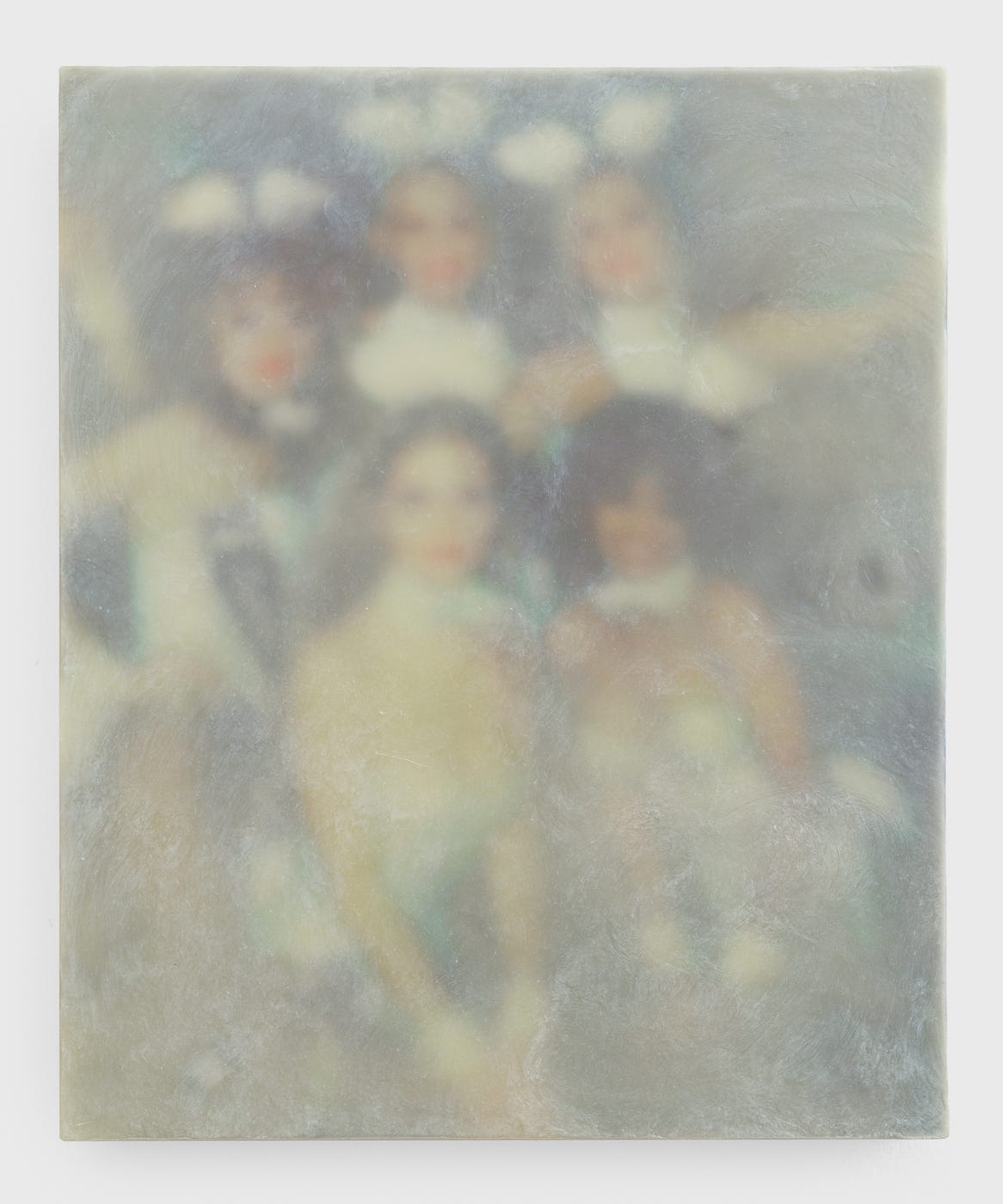
In the end, the 20-year-old Stratten would sacrifice more than love to her Disneyland Hollywood: she would also lose her life, in a brutal rape-murder-suicide at the hands of her estranged husband and former manager, Paul Snider. This would be the cardinal injustice preceding a series of later, smaller tragedies: denials of Dorothy’s true identity in a shower of posthumous films–such as Bob Fosse’s controversial Star 80– essays, and books. “Dorothy Stratten was less memorable for herself than for the yearnings she evoked,” wrote Teresa Carpenter in her Pulitzer-winning Village Voice essay, ‘Death of a Playmate’, the story’s first (flawed) telling. It is true that Stratten’s image became a spectre of projected desires–the available but virtuous teenager immortalised on the pages of Playboy and in the minds of her male associates–but to reduce her to her own mythologisation is simply to (pardon me) twist the knife further.
In life, Stratten was no stranger to her own fictionalisation. “It’s a fantasy. The girl in the centerfold doesn’t exist,” she once said, and ‘Centerfolds’ is the title of Brache’s upcoming exhibition, at Bernheim Gallery, in London. The show, consisting of the artist’s encaustic paintings, veiled in the otherworldly haze of a movie still, will be fragranced by the ‘scent designer’ Marissa Zappas. This is not the first time Stratten’s image has appeared in olfactory form: ‘Centerfold’ is also the title of a fragrance made by perfumer Maddie Phinney and sold by Hollywood Gifts, in a bottle fronted by an image of the model’s bare shoulder and white-blonde hair. Its notes read like one of Brache’s own poems, with “floaty mimosa, pretty-girl musk, styrax, Fancy Mixed Nuts, and earthy patchouli”, or a “Heart-shaped box of milk chocolates, amaretto-soaked cherries, almond brittle, and praline”.
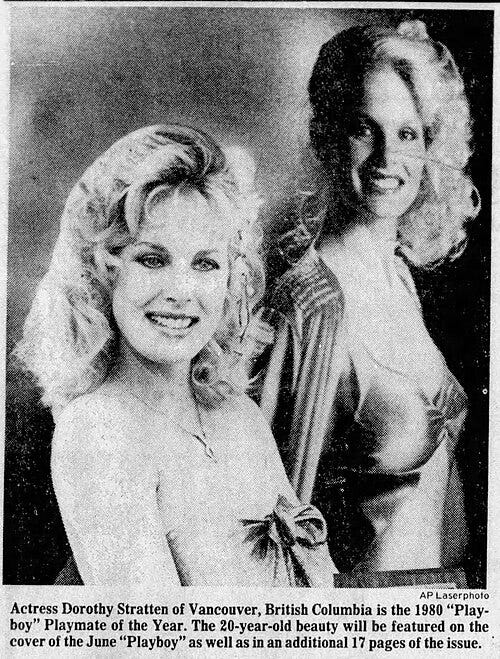
Fragrance is inseparable from desire, which is inseparable from violence. Brache’s liquid distillation of Stratten is a remark upon the cannibalisation of dead female celebrities through their mythologisation. Like Sylvia Plath’s, Marilyn Monroe’s, or Whitney Houston’s, the ultimate tragedy of Stratten’s life was that it was totally overshadowed by her absence: her premature inability to assert her own identity in the face of those who assumed it posthumously. Scent is an apt medium through which to explore this predicament, since it expresses the untouchable and unknowable through the visceral intimacy of inhalation, sitting–as Kant proclaimed–at the intersection of distance and proximity. This certainly speaks to the popular fascination with celebrity perfumes: in lieu of a physical relationship, we consume our idols in other ways, knowing not whether we want to be with them or be them (is the olfactory a cannibalistic sense?)
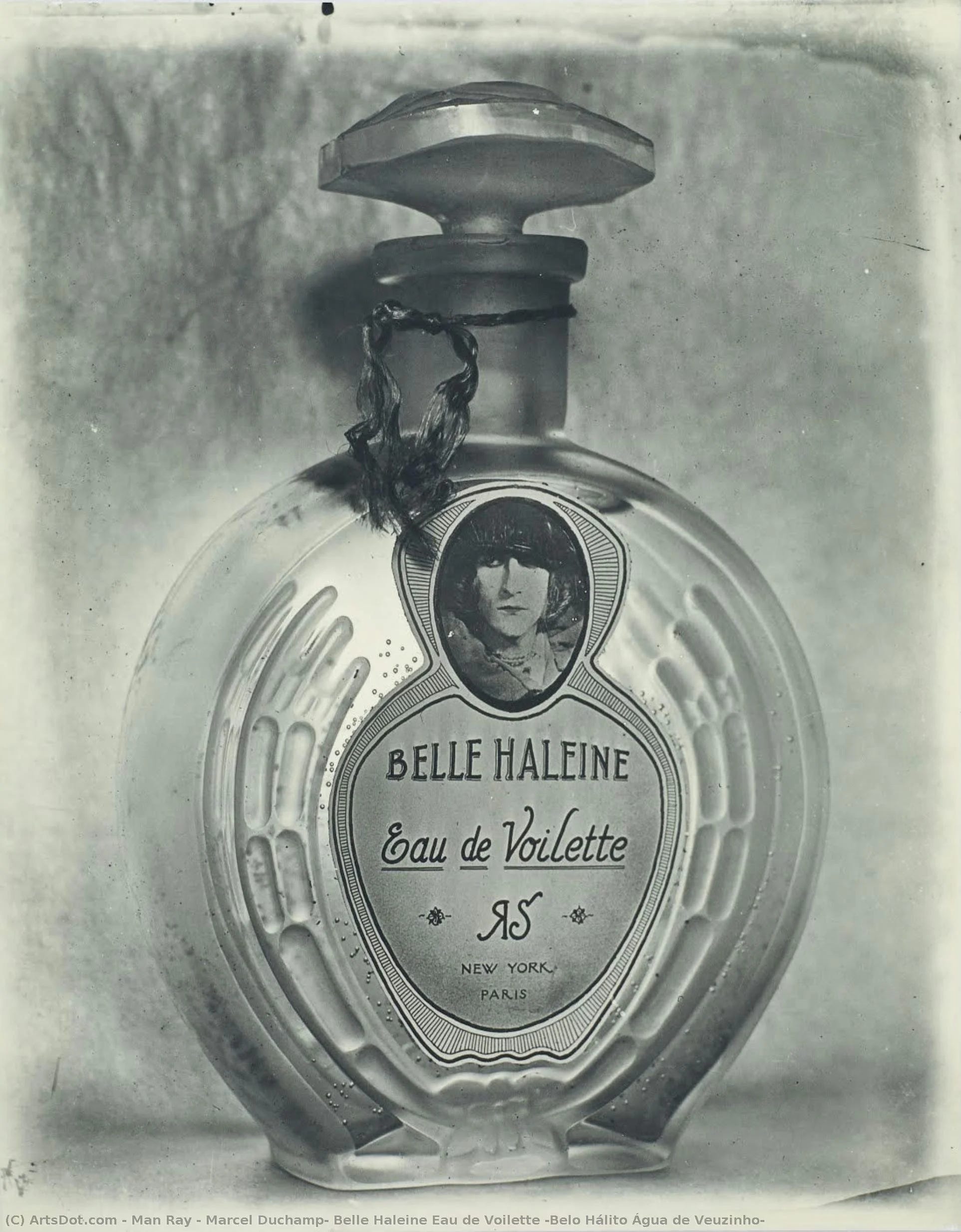
Scent is also implicated in commodification, particularly that of art and (female) life. In 1920, Duchamp developed Belle Haleine, Eau de Voilette (Beautiful Breath, Veil Water) as a prototype fragrance fashioned from a Rigaud flagon, with a substituted label photographed by Man Ray and depicting the artist’s alter ego, Rrose Sélavy. While Rigaud called their product un air embaumé (meaning both ‘perfumed’ and ‘embalmed’), Duchamp obversely crowned his (empty) bottle as a means of ‘breath’ and ‘water’. At its surface level, Belle Haleine demonstrates the rarefaction of art– or, perhaps more accurately, of the artist. It is a contained, consumable essence (as Hal Foster wrote in Artforum, a “magic elixir”), made even more poignant by its record-breaking 2009 sale by Christie’s Paris for a cool $11.36m.
While Duchamp exemplified the artist’s self-constructed mythologisation (through Rrose Sélavy), the intimacy assumed by an olfactory portrait of Stratten is differently nuanced. By evading the art object, instead foregrounding the experiential, scent becomes something to be contemplated, rather than consumed. In this sense, perfume is less an assumption of another’s fundamental elements (fashioned as ‘notes’) and more an act of an olfactory poetry, a dance between presence and absence, reality and dreams, past and present.
Or, as Marcel Proust put it in an exchange with his valet, overheard by Mike Fuller:
André: So you are saying, Monsieur, that the purpose of scent is to allow us to express an almost endless array of attitudes?
Marcel: Yes, and sometimes to capture and project a mood or feeling (possibly quite a complex one) that seems embodied by a certain scent; sometimes to project an image of who we think we are or who we would like to be. The point is, André, that scent provides a hedonist’s paradise rather akin to that of the connoisseur of fine wine.
André: But put like that, it’s a bit decadent, ain’t it, Monsieur?
Marcel: Partly – but arguably no more decadent than music, painting or lyric poetry. For no good reason that I can decipher, the art of perfumery has always been regarded as inferior to other arts and is often seen, from the producer’s side, as a mere tradesman’s craft and, from the consumer’s side, as mere cosmetic ornament. Yet no one finds it especially decadent that music, painting and poetry may also ‘express an endless array of attitudes’, ‘capture and project a mood or feeling’ or ‘project an image of who we think we are or who we would like to be’. It is none too clear why an art based on the nose should be considered so inferior and limited compared with arts based on the ears and eyes. Further, hedonist pleasures, arrived at through the senses, are not necessarily divorced from spiritual dimensions. Even my imperfect knowledge of the history of perfume grasps that scents have long been used in religious ceremonies to induce a spiritual atmosphere, a tradition still preserved by the use of incense in Catholic churches and Hindu temples…The sense of smell, it is widely held, is the most evocative, poetic, and poignant of all the senses.
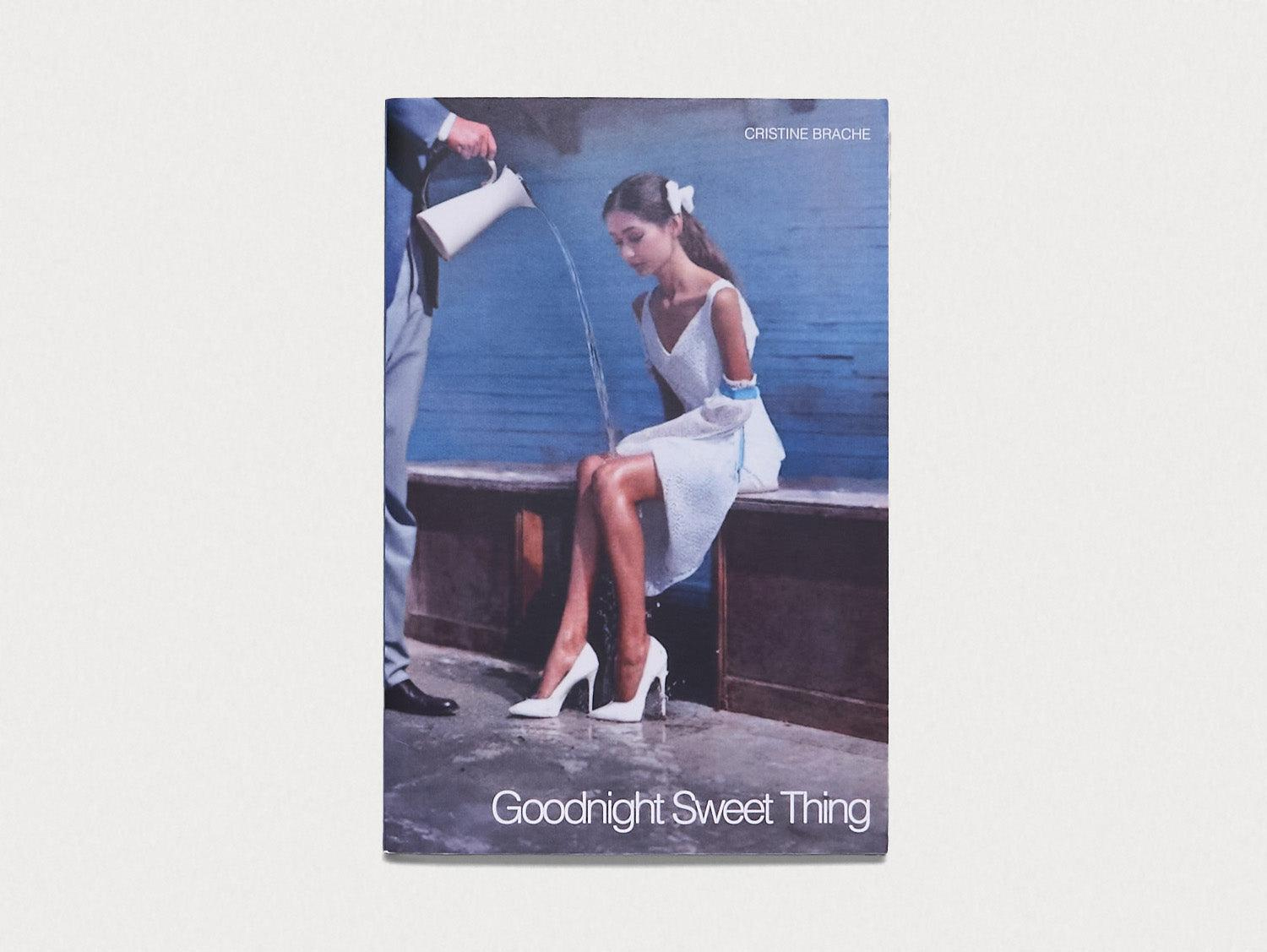
Brache has said that she became fascinated with Stratten when she discovered the latter’s poetry, a practice which had been either omitted from or dismissed by her chroniclers (Playboy printed her turn-ons as “life, love, poetry, and little animals”). Poetry, like fragrance, is somatic, in as much as it can speak to immediate perception before the intellect. In Brache’s own poetry, she evokes a moment–fizzing champagne–and a feeling–the shimmer of heat on the horizon–in sparing language. She too is concerned with the immediacy, and the elusiveness, of the form. In ‘Background Actors’, she writes:
A never-ending song;
A reverberation in time.
It is a phrase which could be applied to a scent from long ago, appearing as a flicker in passing, or lingering long after the fact.
Thank you ! So thoughtful and insightful!